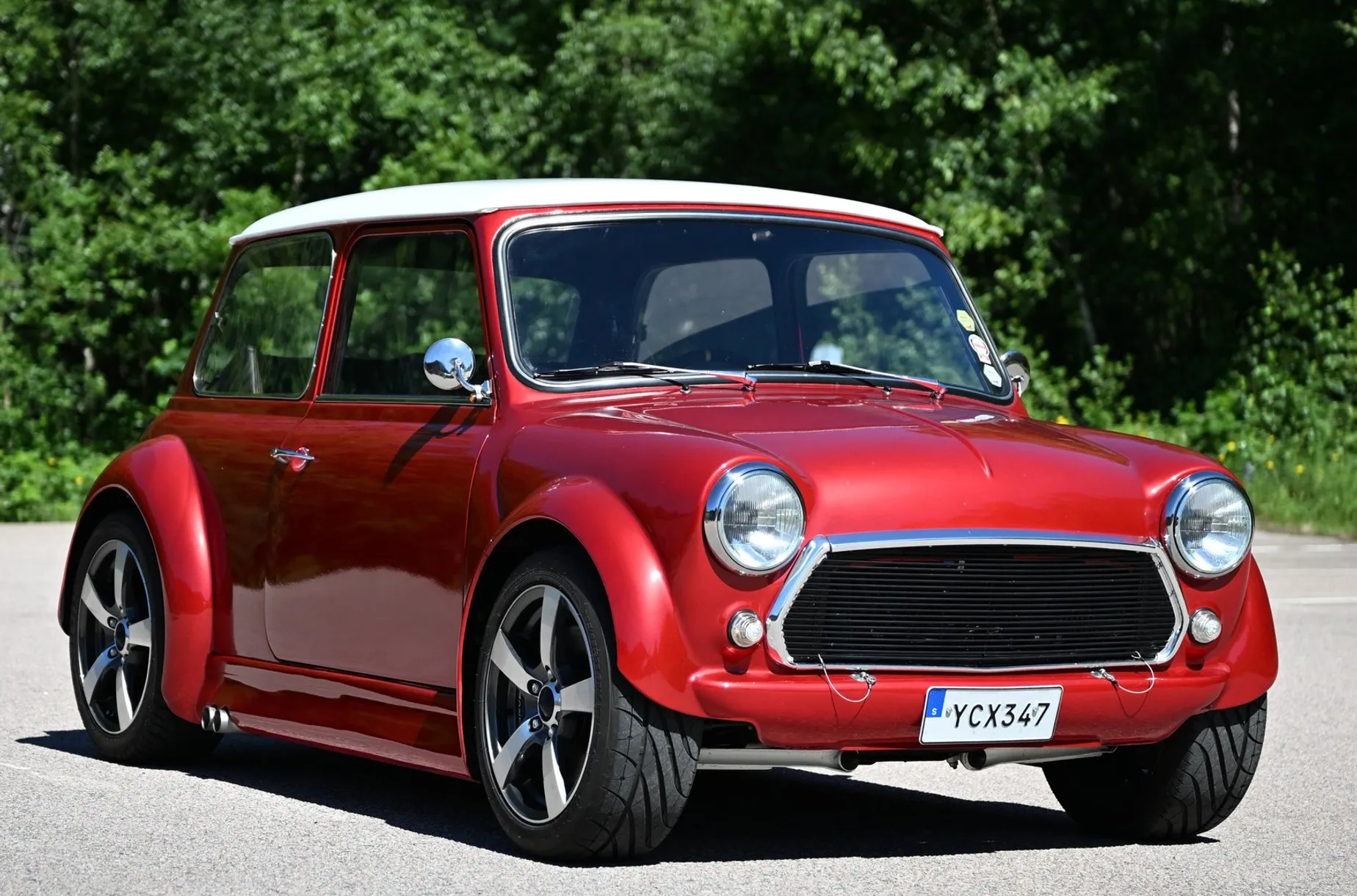
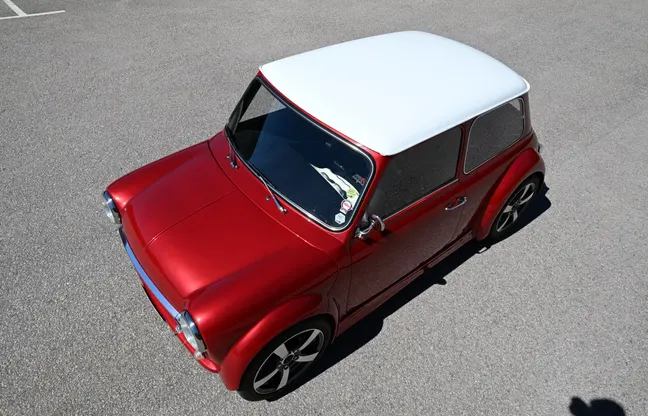
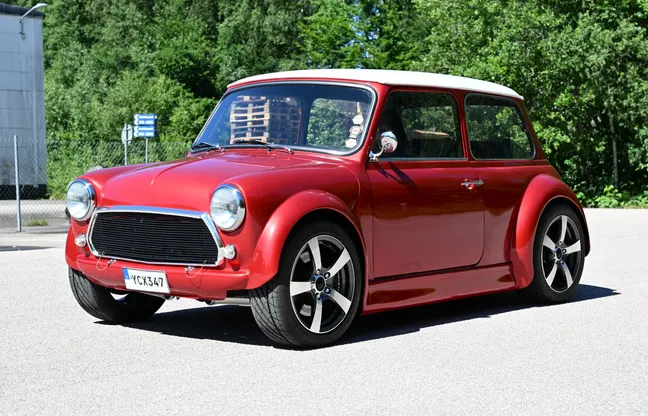
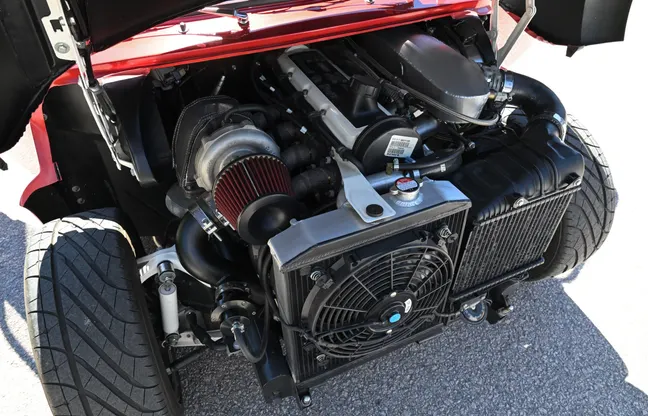
“A super cool, rear-wheel drive and supercharged Mini Cooper, of course street-legal approved!”

Data sheet
- Year: 2013
- Manufacturer: Mini
- Model: Cooper Turbo RWD
- Color: Red
- Interior color: Black
- Interior material:
- Engine displacement: 2.3
- Drive: Rear-wheel drive
- Propulsion: Etanol
- Steering: LHD
- Transmission: Manual
- VIN: YVVB03413********info
Basic information and history
Built on a BMC Mini 1000 from 1970. Purchased in 2008 as a stalled restoration project and built on intermittently until it was registered in 2016, the papers state 2013 since that was when the first construction inspection was carried out. Registered as an amateur-built vehicle via SFRO. Approx. SEK 360 in road tax and inspection each year. At the time of registration it had an original Volvo B230FK, low-pressure turbo with 136hp, and an exhaust system with a large silencer. After the registration inspection the engine has been tuned with, among other things, a larger turbo and a loud exhaust system. The car has always passed inspection without any issues. All parts are present and included in the sale. It was driven somewhat regularly in the beginning to various meets, a day at the strip, etc., but in recent years it has mostly only been driven to and from the annual inspection.
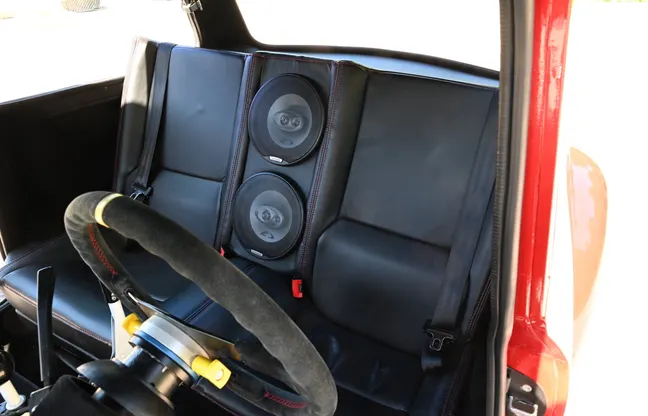
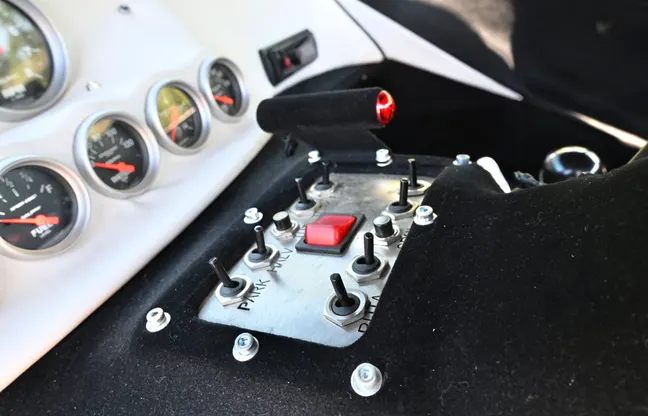
The engine is solid-mounted and there is no notable sound insulation other than the interior trim, stiff suspension, and generally raw feel of the car. The interior is built in fiberglass and flocked black, with white faux leather on the dashboard. The seat is custom-built and upholstered in faux leather. A stereo with 4 speakers is fitted, though no proper sound system as such. Well-done paintwork in good condition. Glass windshield, other windows in plastic. Fender flares, skirts, etc. are hand-hammered in sheet metal with lead-loaded (tin-filled) seams.
Engine:
B230 FK from a Volvo 940, completely gone through with new piston rings and bearings, ARP rod bolts. Lightened flywheel, unsprung sintered clutch disc with reinforced pressure plate. Lightly ported head, new valves and stiffer valve springs. Luntec camshaft, as aggressive as possible while still being street-friendly. Garrett T04 turbo with a snake-style manifold. Aluminum plenum intake and 720cc injectors. Stainless steel exhaust system, 3" down to dual 2" with side exit. Runs on E85, starts easily in spring/summer temperatures, a bit more stubborn in winter.
It can be driven off right away but is then a bit tricky to handle. It may idle a bit poorly right at the start, but once you get the engine temp up past around 40 (on the gauge), it becomes much more pleasant to drive. Dyno-tested and tuned at Luntec to 247 hp at the wheels at only 0.8 bar boost. Fitting larger injectors would allow the boost to be increased considerably further if desired. Volvo M47 gearbox, 5-speed. The driveshaft's rear half is from a Toyota Hilux with adapter plates. The rear axle is a Volvo PV, welded diff.
Rear suspension is 4-link with a Panhard rod and coilovers. The front end is Volvo PV with Bilstein dampers and Mercedes springs, converted to rack-and-pinion steering. The steering rack is from a right-hand-drive "Hundkojja" (Amazon), flipped half a turn. Rear brakes are Saab 9000 calipers with Toyota Camry brake discs. At the front there are Mercedes discs and Corvette C5 calipers. 16" wheels with 205-45-16 tires Painless wiring electrical system and Megasquirt fuel injection system. Approx. 1500 build photos of varying quality included + a binder with various receipts and useful information.
Information from the seller:
There is a bit of tightness in the driveshaft tunnel, or more precisely at the CV ring. If you drive the car alone you won't notice anything, but with two people in the car there is a rattling noise under full acceleration. The car then compresses a bit more so that the driveshaft joint just barely touches the ring and rattles. It is possible to re-angle the rear axle so that the pinion points more downward, which I believe would eliminate the phenomenon — the pinion would end up slightly out of its optimal angle but should still work fine. I have chosen to leave it as it is since I have almost always driven the car alone, and the current angle is optimal according to SFRO's construction manual.