Data sheet
- Manufacturer: Panther
- Model: 75
- Color:
- Interior color:
- Interior material:
- Engine displacement:
- Propulsion: Gasoline
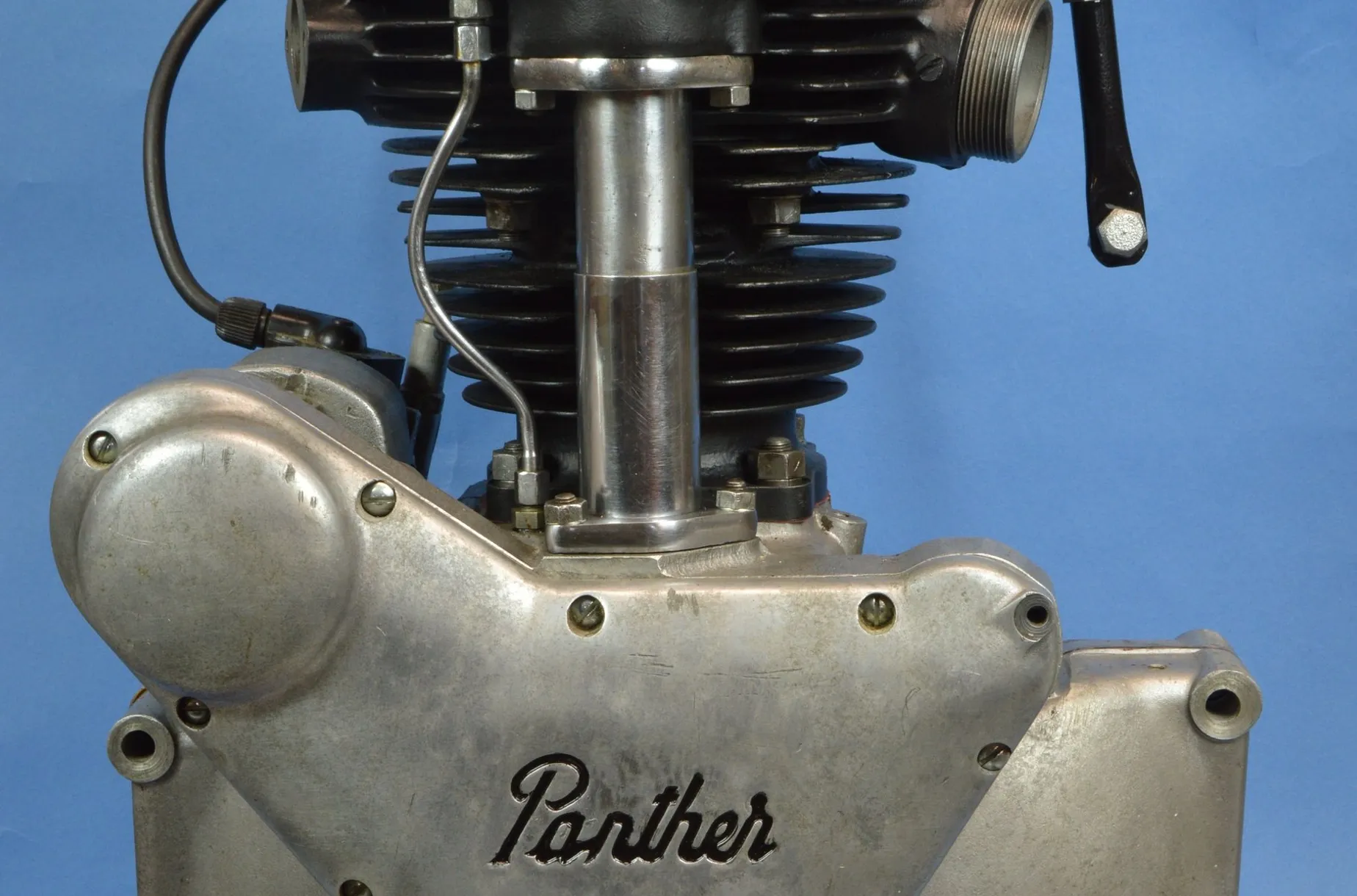
This is the engine that Classic Motor's readers have followed from the barn to the workbench. In the article series Project Panther, which ran in fifteen parts between September 2025 and November 2026, Jim Lundberg took this single-cylinder English motorcycle engine apart piece by piece. Every part was measured, cleaned and addressed as needed before the engine was reassembled, and every step was documented in text and images. Now the engine is being sold at auction, and the entire amount goes to the Trafikskadefonden (Traffic Injury Fund).
Basic information and history
Phelon & Moore began manufacturing motorcycles in England in 1904, and about twenty years later they began selling them under the name Panther. The marque is primarily associated with the large, long-stroke single-cylinder models 100 and 120, at 600 and 650 cc respectively. It used to be said of them that they delivered one piston stroke for every lamppost they passed.
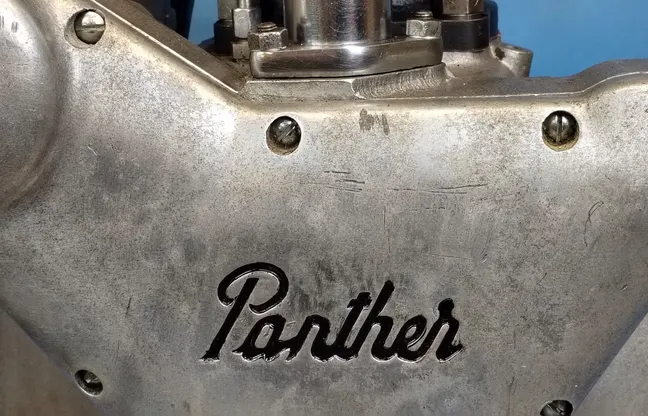
This engine comes from the smaller Panther 75: an air-cooled single-cylinder four-stroke with overhead valves, 348 cc and about 18 horsepower. The model was manufactured from 1949 to 1962, and the same engine was also fitted in the Swedish Svalan MC 75. The engine number begins with 55, indicating that the engine was manufactured in 1955.
The engine comes from the estate of an elderly man and had stood under cover in an unheated barn for several decades. When the work began, the exhaust port was full of cobwebs, the magneto and generator were missing, and the piston was seized in the cylinder. Internally, however, everything was covered by a tough film of old oil, probably vegetable-based, which had protected the parts from moisture. Beneath the surface, the cylinder bore, valves, camshaft and gears proved to be in good condition.
Technology and design
The Panther engine has several solutions that set it apart from contemporary English single-cylinder engines, and some of them surprised even an experienced engine restorer:
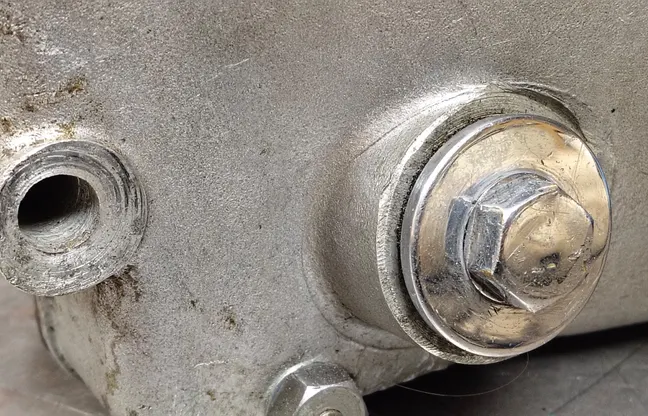
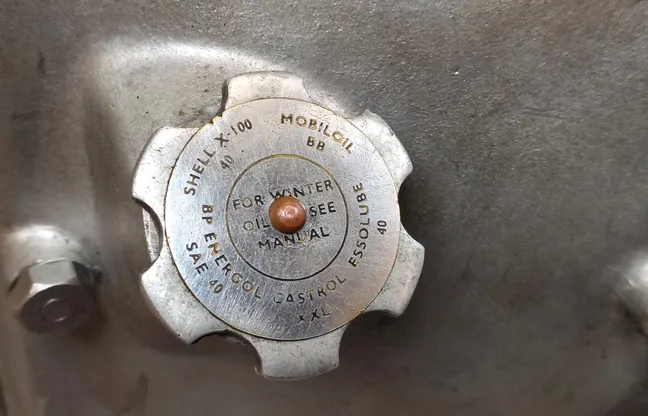
- Dry sump lubrication, with the oil tank integrated into the engine block around a separate crankcase
- The oil pump is built into the hub of the magneto's intermediate gear, where a plunger pumps the oil by moving back and forth over an eccentric pin as the gear rotates
- No return pump: the oil in the crankcase is instead scraped off the periphery of the flywheels by a scraper edge and flung back into the oil tank
- Pressure-lubricated main bearings in the form of bronze bushings on both sides
- Roller-bearing big-end with 32 rollers in two rows
- Extra oil feed to the cylinder's thrust side via a hole in the cylinder skirt
- Oil pressure relief valve, where the excess lubricates the gears on the timing side, plus a fine-mesh oil filter
- Double valve springs and pressure-lubricated rocker shaft for the intake valve
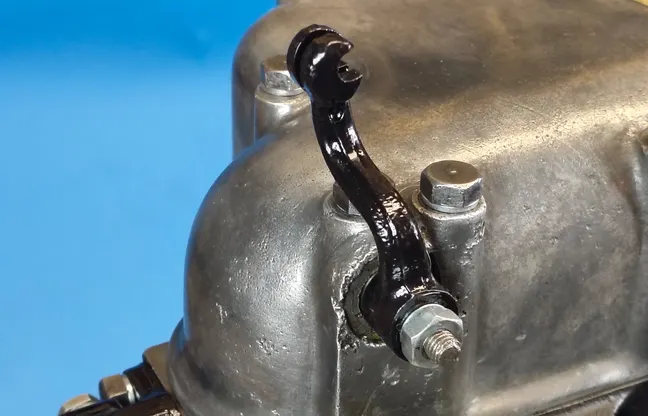
- Exhaust valve lifter for easier kick-starting
- Lucas K1F magneto with manual ignition timing adjustment from the handlebar
- Whitworth threads and spanner sizes throughout
Work performed
The engine has been completely disassembled, cleaned and gone through part by part. Among the work performed:
- All oil passages in both crankcase halves cleaned with a brush, denatured alcohol and white spirit, and blown through with compressed air, in the process clearing a blocked oil hole in the main bearing bushing
- New gudgeon pin bushing turned from bearing bronze and reamed to the correct clearance, with two oil holes compared to the original's one
- New rollers in the big-end bearing, expected to reduce radial clearance from a measured 0.09 mm to around 0.03 mm. The bearing track and crankpin were in good condition
- The connecting rod, which was bent 0.7 mm, has been straightened. The crankshaft has been pressed together and trued to a runout within 0.03–0.04 mm, with a new locking washer
- New oil seal on the drive side
- Loose bronze bushings in the crankcase and timing cover glued in place
- The camshaft was in good condition with minimal wear. The followers (the motorcycle engine's equivalent of lifters) have been ground and polished to full contact against the cam lobes, with the hardened layer retained
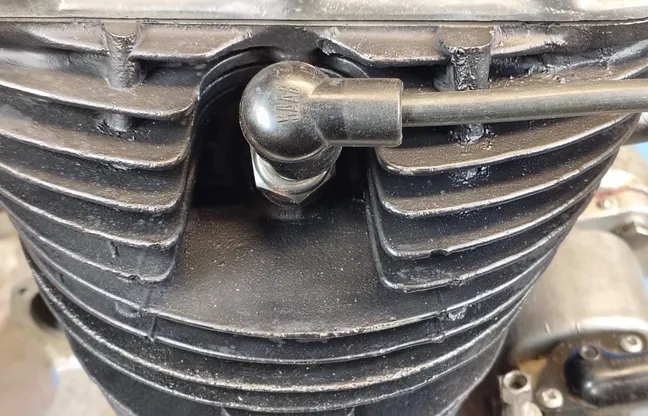
- Cylinder bead-blasted, painted with black heat-resistant paint and lightly honed. The 71 mm bore had only a small ridge and has not needed boring to oversize
- New piston rings, donated by Classic Motor's readers, fitted with checked end gaps
- Cylinder head bead-blasted and painted, valve seats cut and valves ground and lapped
- Copper gaskets for the cylinder head and oil pipe annealed, new o-rings in the telescopic pushrod tube
- Pushrods and followers reassembled in their original positions, and the valve clearance set to the zero clearance specified for this engine
- Ignition timing set to 7/16 inch (about 11 mm) before top dead center and the points gap adjusted to 0.30–0.38 mm
The magneto is not the engine's original, but a Lucas K1F found at the Classic Motor Market in Gothenburg in February 2026. It also has the correct direction of rotation, otherwise it would have belonged on a Vincent Comet.
Condition
The engine has not been restored, but gone through. Parts in good condition have been retained, and the measures taken are those described above.
The magneto produces a spark, but measurements show a break in the secondary winding. The armature therefore needs to be rewound, and this rewinding has not been carried out. Generator not included.
The entire amount goes to the Trafikskadefonden
Classic Motor is donating the entire sale amount to charity, and Bidders Highway is waiving its fee. Thus the entire amount goes undiminished to the Trafikskadefonden.
The fund is administered by Personskadeförbundet RTP (the Swedish Association for Traffic and Polio Injured) and provides grants to members who have suffered a traffic accident and live with the consequences of an injury. The grants go towards recreation, rehabilitation or leisure activities, including leisure aids—things that often become particularly costly for someone living with a permanent disability. Read more at rtp.se.
Summary
A 1955 Panther engine of 348 cc, with an unusual design and a well-documented history. The engine has been retrieved from a barn after decades of standing still and gone through part by part in fifteen episodes of Classic Motor, with a new gudgeon pin bushing, new big-end bearing rollers, new piston rings, a new oil seal, and a straightened crankshaft and connecting rod. It suits a project with a Panther 75 or Svalan MC 75, or for someone who simply wants to own a piece of Swedish motoring journalism. Every krona of the winning bid goes to the Trafikskadefonden.